Church Health Does Not Mean Sanctuary Size but Missional Mobilization. Why Should Churches Foster Other Churches? Calvary Chapel and SBC Partnership. Why Should Churches Help Other Churches? Plus a South African Soda BURSTING with Flavor.
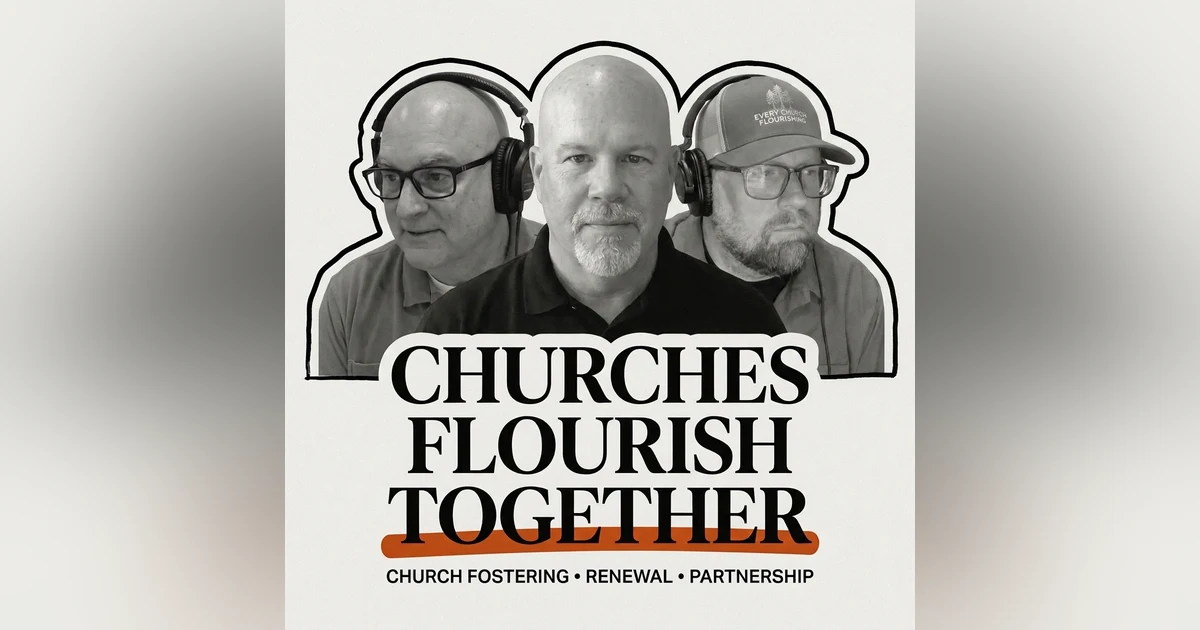


 Apple Podcasts
 Spotify
 Amazon Music
 YouTube
 Youtube Music
 iHeartRadio
 Podchaser
 JioSaavn
 Castbox
 Gaana
Gaana How can churches help other dying, declining, and plateauing churches, and WHY should they? The Health of a Church is Not Found in its Sanctuary Size but in the Great Commissional Mobilization of its people. Why Should Churches Foster (Help) Other Churches?
Today we interview Pastor Ed Compean, a former missionary to Nairobi, Kenya, and a current Calvary Chapel pastor in Morro Bay, California, who is helping to foster an SBC church a few towns over. Why should a pastor from a different denomination invest time, resources, and care into a church that isn’t local? What’s the benefit?
How is pastoring in Kenya different than pastoring in the U.S., and how is it the same?
How Calvary Chapel and Southern Baptist Churches are partnering together for church health in California.
We, as the church, want the overall Kingdom win.
4000 churches are shutting down in the US every year, and much less than that are being planted, and church plants have a low rate of success, so churches should help foster and revitalize other churches for the overall benefit of the Kingdom.
The benefits of going to Replant Lab with Mark Clifton.
When you help foster another church, your church reaps some potent benefits, including building up more and more effective leaders.
A South African soda BURSTING with incredible flavor - like a rock concert turned up to 11. Rubicon Passion Fruit Soda is AMAZING.
Is malic acid bad for you?
Christopher Cole: In sending people out, I honestly believe churches get an opportunity to raise up even more leaders internally and grow in that capacity. And so in some ways, the work of fostering other churches is not only aimed at helping that church flourish, it's also got a component to it that's about discipling your church into greater health and their mentality towards sending.
Coast of California and the beautiful Redwoods, the Every Church Flourishing podcast is all about helping churches, leaders, and pastors find health, encouragement, practical advice, soul care, and resources that work together to build up your local fellowship and the broader kingdom of God. Join hosts Pastor Chris Cole and Dr. Chase Thompson from the Great Commission Association, led by Dr. Mike Stewart, as they explore the frontiers of ministry and aim for the goal of making every church flourish.
Well, welcome back to Every Church Flourishing. We are so glad that you are joining us today on a podcast that is all about how churches are in the work of becoming healthier, thriving, multiplying, fruitful churches. And today we are super excited to welcome to our podcast Pastor Ed Compean of Shoreline Calvary in Morro Bay.
And Pastor Ed, thank you for coming onto the show. We're so glad to have you here. You're a man of great wisdom, insight, character, and good humor to put up with us by joining here with us on today's podcast. And I'm excited because a few years back—and I think we're going to unpack this a little bit later on the show—Pastor Ed led his church to join the Great Commission Association and be part of our work as we are churches on mission together. So welcome, Pastor Ed. Thanks for being on the show.
Ed Compean: Well, thank you, Pastor Christopher. It's an honor to be with you today, and same with being with Pastor Chase. We get to be together; it's a joy.
Chase Thompson: Amen. So, Pastor Ed, we can't have you on and not talk at least a little bit about your missions past in Nairobi, Kenya. Kenya is kind of close to my heart for a couple of reasons—really one recent and one far away. My first ever mission trip was to Nairobi. And just this past week, our church had Vacation Bible School, and the Southern Baptist Vacation Bible School curriculum is Kenya and Wyoming. And I was the missions guy, so we talked about Kenya every day and in church on Sunday.
When I went to Kenya years and years ago, we spent a good bit of time in the city of Nairobi where you served for years. We toured Kibera, the largest rural slum in Africa, which was just mind-blowing to be there. But we also spent some time in smaller cities around like Turbo and Kimilili and some places like that. I preached in a church in Kimilili. As far as I know, I was the only Mzungu there, and that was kind of weird. And they gave me a goat when I finished preaching, which was an interesting thing. I ended up giving it back to the church because I didn't really—I would love to have a goat at my house, but I didn't know how to get it there.
So I've never forgotten the people; I've never forgotten the taste of the fruit. The fruit tastes so much better than what passes for fruit in America. And you were in Githurai, which is a very densely populated urban part of Nairobi that a lot of the Kikuyu tribe were there. We had some good Kikuyu friends in Kenya. So tell us about pastoring in Githurai and life in Nairobi, and how is pastoring in Nairobi and pastoring in Morro Bay different—which there's probably a million reasons—but how is it the same?
Ed Compean: Oh, interesting. Well, people are desperate for the gospel everywhere. And all nations, tribes, peoples, and tongues need the same thing: they need the gospel of Jesus. So that's universal regardless of culture.
They are obviously a much more tribal people, and there is a background of witchcraft in the community and traditional African religion. As opposed to us—we have a somewhat Christian heritage, whether we are actually living that out here or not. But there is a heritage of Christianity in this country: a lot of our morality, a lot of our laws, even our founding documents. There, not so much. There's a definite idea of "I can do transactions to gain God's favor," and that unfortunately creeps into the church a little bit.
We also served largely in the slums purposely to help develop churches in the slums that would therefore go back—those people might go back to their home areas. An interesting thing about Kenyans is you and I, wherever we slept last night, whatever bed our shoes were under, we can call that home pretty easily. But for a Kenyan, it's where their family heritage is, where they expect to be buried, where they will have an inheritance from—they call it their shamba. And so the goal was, as people would come into the larger city and the larger slums, they might return to those areas and plant more rural churches. There was kind of a strategy behind what we would do.
Talking about the differences: one of the things I really wanted to do there was I had no desire to be a lead pastor as much as develop churches that could be turned over—kind of the Paul model—and then let others come in and take it over, develop leaders there, and develop pastors there. And that's kind of happened, where there's been generations of churches now. I can't say there's a huge church movement, but there's been a number of churches that have flowed out of that. Be careful—you asked me to talk about one of my favorite things, which is Kenya. There's still some red soil under my fingernails if I look close enough.
Chase Thompson: Oh yeah, amen. So what is the difference between raising up and training Kenyan church planters versus raising up and training American church planters?
Ed Compean: Well, there I had to have the mindset that the first time we got together for a Bible study was the deepest I would ever be. The next week, I'd ask someone else to make the tea, someone else to pass out the Bibles, and so on. We had a strategy to be somewhat of a catalytic church as opposed to them always having a Mzungu pastor. I'm okay for the first layer, but the second layer I'm not going to be great at.
Here it's been a different game. I've been at this church 10 years—this week, actually. And that's a whole different game for me. I've got to see kids raised up here, go off to college, and now come back. It's just a joy to actually be able to effectively pastor them.
Again, the need is the same: a desperate need for the gospel that not only saves, but sustains the people. So we just keep coming back to that—looking for ways to engage lives, entangle lives, and bring Jesus into them as much as we can.
Christopher Cole: We are so glad to have missiologists and missionaries with strategic mindsets as part of our work in the Great Commission Association. Dr. Chris Smith and I often talk about how much we value the shepherds and pastors in our association that have that experience and orientation, because you bring a different way of looking at ministry into the contemporary mission field.
Pastor Ed, you've certainly exemplified that. One of the characteristics we would say is that you tend to look way more kingdom-oriented than just local church-oriented—asking what's good for the broader kingdom rather than just "what's good for my local church?" Even if we don't always intentionally ask that, missionaries are generally oriented on a broader scale. That brings a strength into many of our interactions.
With that in mind, one of the things we really want to talk about today is the work that Shoreline Calvary has done with Red Oaks Baptist Church in Santa Maria. You were integral in helping make that happen. We want to talk specifically about the foster church partnership that your church has with Red Oaks as they work through our strategic Renew initiative.
Historically, Shoreline Calvary is a Calvary Chapel church, and we're an SBC group. You guys came first into our association. We want to hear that story, and then hear how you got engaged with Red Oaks. Start with where you guys came into the association and why.
Ed Compean: A few years before that, we were involved with a little Spanish-language church here in our community in Morro Bay. Not in a very deep way, but we got to know them, and they went through a very hard pastoral transition. It was a pretty tough time. My Spanish was pretty poor, but I still wanted to help them, so we got to know them and support them—if nothing else, just pray with them.
Through that, I met Dr. Chris Smith. What I didn't know is Dr. Chris was "dating" me or dating our church. He was going to drop a hard question on us later! We identified with each other because he has a missionary background as well. As we got to know each other, he finally said, "Have you thought about becoming a GCA church?" And I said no, I hadn't; I thought we were just getting lunch.
Christopher Cole: You didn't know he was going to pop the question!
Ed Compean: Yeah, I didn't know he was going to pop the question! We met a few more times, and I had some questions about it. I came to realize there were a number of other Calvary Chapels that have done the same. Calvary Chapel at that point was going through some really hard things, and there wasn't a lot of community as far as accountability and those sorts of things.
I brought it back to our elders. That may be one of the differences between a traditional Calvary and a traditional SBC church: we tend to be more elder-led. We had that time together with our elders, and we said, "We don't want to shun our heritage, of course, but at the same time, we need some other relationships to help us." It wasn't just about what the SBC and GCA could give to us, but how we might be able to partner together for the furtherance of the gospel. We prayed it through, fasted, and weighed it before the Lord.
We have an elder on our team who is a former Baptist pastor, and he was really enthusiastic. I told him I didn't want to go with just emotions, so we took some more time to pray. It has been a great fit; we don't regret it for a moment. I've come to find there's a whole mess of Calvary Chapels that have partnered with various SBC associations across the country. Apparently in the Northeast, it's almost like a given that if you're a Calvary Chapel, you're also an SBC church.
Chase Thompson: I was unaware of that. Wow.
Ed Compean: It's been nothing but a blessing for us. One of the first things we did is we went through a situation where we needed to buy a building. We had been renting a school building full-time for 20 years, and the rent was jumping so much that we had to make a move. Between that move and a couple of staff changes, we had taken some hits.
I asked Dr. Chris Smith to come over, work with us, and help give us an assessment. It was one of the best things we've done as a church. We were a healthy church, but we were on the start of a slide. They were able to objectively tell us a few things we needed to think about. It's probably the best thing we've ever done as a church, at least in my 10 years here. I've pitched that assessment to other GCA churches to try to keep those guys busy!
Christopher Cole: Absolutely. We love helping churches develop more full-fleshed strategies, get insight into their condition, and encourage and inspire them. We want to come alongside churches and help them pursue what God is calling them to do. We love the way you guys have embraced being part of our GCA family.
One of the ways you've done that is by stepping into the work of fostering a renewing church. Tell us: how did Shoreline Calvary and Red Oaks Church enter into each other's lives and into relationship?
Ed Compean: Pastor Christopher, you may have been the one who introduced us to the idea. When it came to us, it was like: of course. If you see someone that needs CPR, you're going to try, right? I didn't want to lose this church. I would probably say that if it were any middle-of-the-road evangelical church, much less one that was kind of family now. I want to see them thrive.
When I first came to the Central Coast, a recent survey showed this is one of the least-churched places in America—from Santa Maria up through the Paso area. It was actually less churched than some parts of the Bay Area. It bothered me that there was a church on life support.
This was around the time we were going through our own assessment stuff, and I realized I didn't have the personal capacity to take it on alone. But we had Pastor Glenn Myers, a retired pastor who serves as an elder with us. He retired from a great church down in Southern California, landed in Morro Bay, and asked how he could help. I approached Glenn and asked if he could take the lead on this. He has really run with it to love and help them. I've had the honor of going down there a few times to preach and attend key meetings, but Glenn has largely spearheaded it.
As a church, we want the kingdom win. If the victory is that a year or two from now they have a solid pastor and the church is growing even a little, that's good, and we want to celebrate that. We're not going to let them fail without trying. We pray for them, provide counsel, and fill the pulpit where needed, with the long-term goal that fostering will help them become healthy enough to stand on their own again.
Chase Thompson: That's awesome. One of my character flaws is that I'm wired to say yes. If you pitch me an idea, I see the possibilities. But as I get older, I'm trying to learn that saying yes to several things means saying no or being mediocre at other things, because human limits mean we can't be great at everything.
Talk about the early stages when you first encountered this opportunity at Red Oaks. You saw a church about to die and didn't want to let it die. But Jesus talks about counting the cost before building a tower. How did you process counting the cost, realizing you couldn't just wave a magic wand and make it healthy?
Ed Compean: That's exactly the passage I was thinking of—counting the cost. For us, that meant rotating our elders and capable Bible teachers down there, which meant they weren't available here. We're not a huge church. Sending one of our elders who is an incredible preacher meant his wife would go with him, and she's our children's ministry leader. It's a little over an hour away, so there is a real cost.
But it's worth it for the kingdom. You sacrifice what you love to retain what you love even more: a thriving church. If I go down there, someone needs to cover the pulpit here.
Here's the trick: all those guys have become better preachers! It's been a hack on our side. They go down there and give a great message without pulling punches just because there might only be six people in the room. Steve, Garrett, and Randy have all stepped up, developed their skillset, and learned to trust the Lord. That's not the primary reason we do it—we want to see that church thrive—but it has been a tremendous blessing. I look forward to the day when they are calling the IMB with a missionary, planting a church, or hiring a youth leader. Right now, it's about keeping their head above water until the right revitalization pastor comes along.
Chase Thompson: It's like a coach getting playing time for his players. If you have one team, you're limited in how many people can play, especially at the preaching position. With two teams, you double the opportunities. The more people are hands-on doing ministry, the better they get.
Ed Compean: Spurgeon—or someone like him—once said that your first hundred sermons really stink. Our guys are getting their reps in! And it's a gentle, smaller room of people who just want to be fed.
Christopher Cole: J.D. Greear says churches need to shift their mentality away from measuring themselves by seating capacity and begin to understand that health is found in sending capacity. Developing leaders requires a context, and you are discipling your people and growing your sending capacity while helping another church survive and thrive.
Smaller churches often feel they don't have extra people to spare. But in sending people out, churches get an opportunity to raise up even more leaders internally. Fostering not only helps the recipient church flourish, but it also disciples your own congregation into greater health and a sending mentality.
Ed Compean: That is exactly what we've experienced. When this came along, Glenn and I put on a multi-week teaching class with a group of men, followed by one for the women's teaching ministry. It developed them, and then we had a place for them to use that gifting. These guys have grown in confidence to share the Word.
We have a saying here: "We send our best." Whether it's a student serving at camp, a missionary, or teachers going to Santa Maria for God's glory, we send our best. Who wouldn't do that?
Christopher Cole: It reflects the spirit of the church at Antioch—seeing the need and sending out their best leaders.
In GCA's Renew strategy, we use terms like revitalization, replanting, and fostering. Fostering is like giving a church a temporary safe home to restore health, receive positive inputs, and relieve the crushing burden of survival. You guys have covered the pulpit roughly three-quarters of the time, served on the Renew board, and built strong relationships.
Why should a church choose to foster rather than just letting a dying church close and planting a new one later?
Ed Compean: An assessment helps determine if a situation is terminal and requires a full replant. But if there is hope, fostering allows you to help restore them while respecting their autonomy. As a police chaplain, if you see someone who has fallen, you help them. How much more so for the body of Christ? What if 20 years from now Red Oaks plants a church or sends a missionary to an unreached people group?
There is also a practical reality: as I learned at the NAMB gathering in Atlanta, when a church shuts down in California, that land is rarely reclaimed for ministry because real estate is too expensive. If that land is lost, it turns into a gas station or convenience store. That property was dedicated by God's people in the past, and we want to keep it alive until leaders can help it thrive as a church again.
Christopher Cole: You mentioned the NAMB Replant Lab. We try to send all of our replanters, interns, and foster church leaders to that annual event in Alpharetta hosted by the North American Mission Board. You and Pastor Glenn attended this past year. What did you take away from that event, and why would you encourage other pastors to attend?
Ed Compean: Roughly 4,000 churches close every year, and many new church plants don't survive past their first few years. We need to fight for existing churches. Helping a struggling church turn the corner sets a model so that they can one day foster or replant another church down the road.
Going to Replant Lab showed us that we are not alone. I came away with a notebook full of contacts and relationships. Looking at case studies gave us a 360-degree view of church decline and turnaround patterns. Seeing that Red Oaks' challenges weren't unique gave us confidence that the situation wasn't terminal. We came back fired up with real hope.
Christopher Cole: The tools, assessments, and community at Replant Lab are incredible for learning how to move churches from decline to stabilization and multiplication. NAMB hosts the Replant Lab in February and the Replant Summit in August, and resources can be found at churchreplanters.com.
Chase Thompson: We're around the 32-minute mark, so let's take a break here. Next week, we'll continue the interview and dive further into the story of how Shoreline Calvary connected with Red Oaks.
Up next, Pastor Christopher and I are going to try a South African soda: Rubicon Sparkling Passion Fruit!
Christopher Cole: In another episode, we tried Granadilla Twist. Rubicon drinks—now owned by A.G. Barr, the makers of Irn-Bru—makes a sparkling soda that is passion fruit with tropical fruit flavor. We're trying that today.
Chase Thompson: It's made with real fruit juice.
Christopher Cole: It looks like it's 65 calories for the can.
Chase Thompson: Not bad, not great—one of those overseas slightly lower-calorie options.
Christopher Cole: That might explain why they stay slimmer than we do! The can is a nice dark purple with an orange layer and fruit design.
Chase Thompson: Pastor Christopher, are you familiar with the expression "crossing the Rubicon"?
Christopher Cole: I am, but tell us about it.
Chase Thompson: It dates back to 49 BC when Julius Caesar led his army across the Rubicon River, defying the Roman Senate and passing a point of no return that triggered a civil war and the rise of the Roman Empire. When was the last time, in ministry or life, that you "crossed the Rubicon"?
Christopher Cole: It might have been trying those Lester's sodas—a true point of no return! But seriously, what came to mind for you?
Chase Thompson: In late 2019, our church made the decision to relocate from South Salinas to North Salinas to reach the families of Anthem Christian School. That was a significant Rubicon moment for us.
Christopher Cole: For me, two different churches I've served with made the decision to sell their property and relocate or become intentionally mobile. Selling property is a massive decision and a true Rubicon moment in ministry.
Shall we cross the Rubicon and taste this soda?
Chase Thompson: There is no turning back!
Christopher Cole: You drank without smelling—bold!
Chase Thompson: The smell is mild, but the flavor is bursting!
Christopher Cole: That is a tasty soda. In comparison with Granadilla Twist, this exceeds it in every way.
Chase Thompson: The top of the can says, "Bursting with flavor to feed your curiosity and quench your thirst." It really delivers.
Christopher Cole: It has a rich, strong passion fruit flavor—like drinking the tropics! You could easily serve this at a tropical beach.
Chase Thompson: It is full-flavored and powerful. Looking at the label, it's 4% juice, with malic acid, pectin, and gellan gum providing that flavor punch. Malic acid isn't bad for you, though high concentrations in sour candies can cause issues.
Christopher Cole: Compared to American sodas, it's very low calorie.
Chase Thompson: How many Spurgeons do you rate it?
Christopher Cole: I'd give it a 4.75 out of 5, which is quite high for me.
Chase Thompson: I'll go 4.95—just shy of a perfect 5.0.
Christopher Cole: You get a very slight hint of the sweetener, but overall it's great.
Speaking of Spurgeon ratings, 30 years ago my preaching professor, Dr. Craig Skinner, used to tour as a Charles Spurgeon impersonator for an event called "A Night with Spurgeon." He used to advise us to eat a candy bar and drink a soda before preaching!
Chase Thompson: In my preaching class in seminary, the only point deduction I received on my final sermon was because I drank a soda while preaching—and I still do it today!
To peel back the curtain: we actually recorded that soda review a few weeks ago. The soda was so good that while editing this episode, I paused to try to find a 12-pack online!
A few quick announcements from the Great Commission Association:
* August 22 (5:00–8:00 PM): Youth Rally in Arroyo Grande at 102 West Branch Street.
* August 25: Great Commission Training Institute begins a 7-week Applied Church History course via Zoom, taught by Dr. Chase Thompson.
* September 19: Flourish Equipping Conference for Women in Ministry at Journey Christian Fellowship in San Luis Obispo (317 Foothill Blvd).
You can register for these events and partner with us at gcasbc.org. Thanks for listening, sharing, and leaving a review. Godspeed!